Fearlessness Meets Authenticity: A Tribute to Mich
What one fearless, unfiltered life taught the people lucky enough to witness it
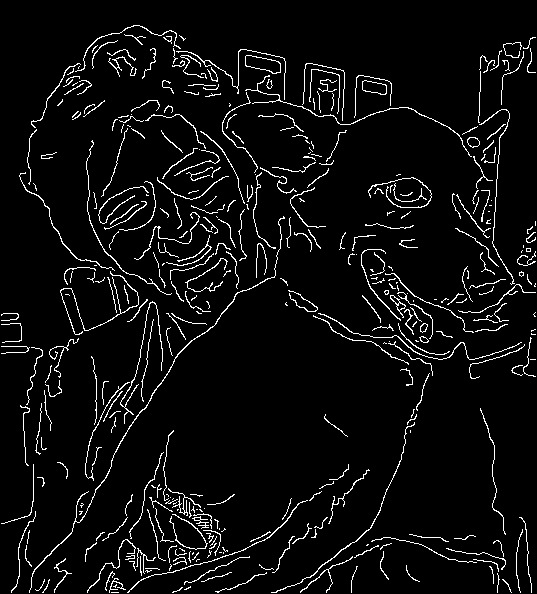
Some people you meet in college barely register. A name at a party. A face you wouldn’t recognize five years later. Michael Jung was the opposite of that. He walked into your life and rearranged it, and he did it so naturally you didn’t even notice until you looked around and realized everything was different.
We met during junior year at Illinois State University, at a party he was throwing in his apartment. And I mean throwing — three kegs, a hundred people minimum, the place absolutely packed. Music going, people everywhere, the whole building probably vibrating.
And the host? Gone.
Eventually somebody pointed me to his room. There he was — door cracked, headset on, deep into Skyrim, totally at peace while his apartment rattled around him. He’d set the whole thing up, opened the doors, stocked the kegs, and then just… went and did what he wanted. Let everyone else have their night.
Most people throw parties because they want to be the center of it. Mike threw them because he genuinely wanted people to have a good time, and then he disappeared to go play video games. It was generous and weird and completely authentic — and it was the first of about a thousand times Mike would do something that didn’t make sense to anyone else but made perfect sense if you understood who he was.
The crowd thinned out. The kegs went dry. Somehow the two of us ended up talking until the sun came in through the blinds. We went everywhere — half-baked business ideas, how the world actually works versus how everyone pretends it works, what we wanted to do with our lives before either of us had any real clue. That kind of 4 a.m. conversation you can only have when the pretense burns off and two people are just being honest with each other.
By morning, something had locked in. That thing where you meet someone and you know — this one’s going to matter. Not in a small way. In a rearrange-your-priorities, change-how-you-think kind of way.
Two years later we were roommates, and those might be the most alive years of my life.
Our apartment became the place. Not because of the apartment — it was nothing special. Because of Mike. He had this energy that pulled people in. Friends, friends of friends, total strangers — didn’t matter. Everyone ended up at our place and everyone ended up in a real conversation, because Mike could make somebody he’d met ten minutes ago feel like they’d been friends since childhood. Not through some technique. He was just genuinely, aggressively interested in people. Wanted to know what you thought, what kept you up at night, what you actually cared about underneath all the surface-level stuff. And he remembered. Months later he’d bring up something you’d said offhand and you’d realize — this guy was actually listening the whole time.
Our nights turned into marathon 3 a.m. sessions. World economics. Business ideas that ranged from brilliant to insane. Debates about whether we’d actually commit to any of the stuff we talked about or just keep talking. Sometimes we got serious. Sometimes it was two guys who didn’t want to go to sleep because the conversation was too good. Half of it was probably garbage. But some of it wasn’t — and with Mike, even the garbage felt like it was going somewhere, because he had this way of treating every idea like it deserved a real shot before you killed it.
People didn’t just visit our apartment. They orbited it. Mike turned a random college living room into something closer to a think tank that happened to have a couch and leftover pizza. Strangers walked in. Friends walked out. That was just what happened around him.
His last name was Jung. Like Carl Jung — the psychologist who spent his whole career arguing that the deepest thing a person can do is stop pretending and become who they actually are. He called it individuation: stripping off the masks other people hand you and building something real underneath. Mike never read any of that. Didn’t need to. He was already living it, with more cursing and better stories than Carl ever managed.
The chemistry exam story tells you everything.
Mike had a chem test. He’d been up all night — studying, sort of, among other activities. He slept through it. Not by a few minutes. By hours. The exam was long done.
“Dude. Your exam ended hours ago.”
He didn’t flinch. Didn’t panic. Reached for the beer that had been resting on his chest the entire time he was passed out — still amazed at how absolutely still this man slept, that beer didn’t move an inch — took a sip of it warm, and just goes:
“Meh. Fuck it. What do you wanna do today?”
People hear that and think: irresponsible. Lazy. Doesn’t care.
Wrong. Mike cared deeply. He was just ruthlessly honest about what he cared about, and a chemistry grade wasn’t on the list. To him, the real education happening at college had nothing to do with periodic tables. It was about the people you let in, the ideas you tested out loud, the version of yourself you were building when nobody was grading you on it. He didn’t pass every class. But he understood something about how to actually live that most people spend their whole lives circling around and never quite landing on.
Mike’s instincts weren’t hypothetical. He bet on them. Hard.
In 2013, his grandmother left him roughly $60,000. He was 23. Most people that age would park it in savings, feel responsible, and slowly watch it do nothing. Mike had been hearing the crypto pitch during our late-night sessions — back when Bitcoin sounded to most people like a scam or a punchline — and he looked at it, did his own thinking, and went all in. Every dollar. No financial advisor. No backup plan. No hedging.
All in, because that’s who he was.
Within a few years, he was a millionaire. Got a license plate that said COINMAN. Wore it with that grin — the one that said I trusted myself and it worked without a shred of arrogance behind it. Because here’s the thing about Mike: the money was never the point. The point was the principle. Trust your gut. Do your own thinking. And when you’ve made up your mind, don’t half-ass it. Move.
While the rest of us were still drafting pro-con lists, Mike was already living in the answer.
Then one night — and this is so perfectly Mike — he’s scrolling Zillow, sees a condo in Arizona, and decides on the spot to buy it. Flies out within days. Packs up his life and starts over in the desert. Just like that.
He built a life out there. Explored every corner of it — Biosphere 2, Colossal Cave, the trails around Tucson and Flagstaff, Grand Canyon. Miles of open desert and saguaro and sky, and Mike right in the middle of it. He made a home that felt exactly like him: warm, open, and ready for whoever walked through the door.
He told me to come with him. Move out, start fresh, do something different.
I stayed. Had stuff going on. The kind of stuff that felt important at the time and means absolutely nothing to me now. That’s the thing about people like Mike — they offer you the leap, and you only realize you should’ve taken it after they’re gone.
For all the wildness, for all the big swings — Mike was a family guy at his core. That part never gets lost.
Look at the photos. Mike in Japan with his brother Steve, 2018, grinning in front of a temple like they owned the place. Mike in Hawaii with his nieces and nephew — not standing behind them for a posed shot, but down at their level, completely locked in, giving them his full attention the same way he gave it to everyone. The Jung men in Arizona. Mike and his mom — her pride so obvious it practically has its own light source. Family dinners in Puerto Rico, trips to Charleston, holidays where he didn’t just show up but showed up. Present. Real. There.
That energy he had — the thing that made strangers feel like old friends, the thing that made every room he was in a little more electric — that didn’t come out of nowhere. That came from the people who raised him. His family built that foundation. And everyone who ever met Mike and walked away thinking what is it about that guy? — the answer traces back to them.
Carl Jung wrote about the idea that life is a series of synchronicities and transformations. That the whole point is to keep evolving, keep shedding what isn’t real, keep moving toward whoever you actually are under all the noise. It’s a beautiful framework if you’ve got the patience for academic writing.
Mike lived it in a way Carl never could have put on paper.
He was authentic when it cost him. If you didn’t like him, fine. He wasn’t going to rearrange himself to get your approval. But that same honesty — the kind that can sting — was the reason his friendships were real. No performance. No angle. You always knew exactly where you stood with Mike, and that kind of clarity is rarer than people think.
He was fearless when it mattered. Not reckless — fearless. There’s a difference. Reckless is not thinking. Fearless is thinking, feeling the fear, and going anyway. The Bitcoin play. The Arizona move. Every major turn in his life pointed straight at the thing that would’ve made a more cautious person turn around. Mike walked toward it every time.
He was optimistic in a way that was contagious. Not naive. Not blind. He saw the same world everyone else did. He just refused to let it shrink him. Whether it was dropping a class, betting his inheritance, or moving across the country with a smile and a grin, he operated on this deep, unshakable belief that things work out for people who actually commit. And the thing is — for him, they did.
Mike died in a hiking accident during harsh winter conditions. He was 34 years old.
That’s a sentence that still doesn’t feel real to write about, to think about. Never will.
What I know is this: he was doing exactly what he always did. Going somewhere most people wouldn’t go, in conditions most people would back away from, because standing still was never something his body understood how to do. That’s not a consolation. It’s just the truth about who he was.
The world got quieter when he left. Not metaphorically — literally. The phone stopped buzzing with his texts. The 3 a.m. debates stopped. The random “you should do this” messages that always turned out to be right — gone. There’s this specific silence that follows losing someone like Mike, and it doesn’t fill back in. You just learn to live in a slightly quieter version of things.
But he’s still in the room. Every time the safe choice and the real choice aren’t the same thing and the real one wins — that’s Mike. Every time someone chooses honesty when it would be easier to perform — Mike. Every time a conversation goes past the surface-level stuff and into the place where people actually connect — that’s the frequency he operated on, and the people who knew him are still tuned to it.
He showed up to this life fully. Not perfectly — fully. And he left behind something that a lot of people who live twice as long never manage: proof that it’s possible to just be who you are, all the way through, and have that be enough.
More than enough.
Mike,
Wherever you are.
Do not rest.
Live.
See you later.
If any of this hit you — go do the thing you’ve been putting off. The scary one.
Mike would.